Karaport
A marketplace for used industrial machinery, built so a machine can be found the way it is actually bought — by category, by seller, and by where it is standing.
- Client
- Karaport
- Sector
- Industrial machinery marketplace
- What we did
- Web Development

What it does
Karaport is where industrial machines change hands in Turkey — turning centres, milling machines, laser cutters, presses — listed by the people who own them and by the dealers, distributors and leasing banks who trade in them. The platform takes no commission on a sale, which puts the whole weight on the listing itself: nothing downstream pays for it.
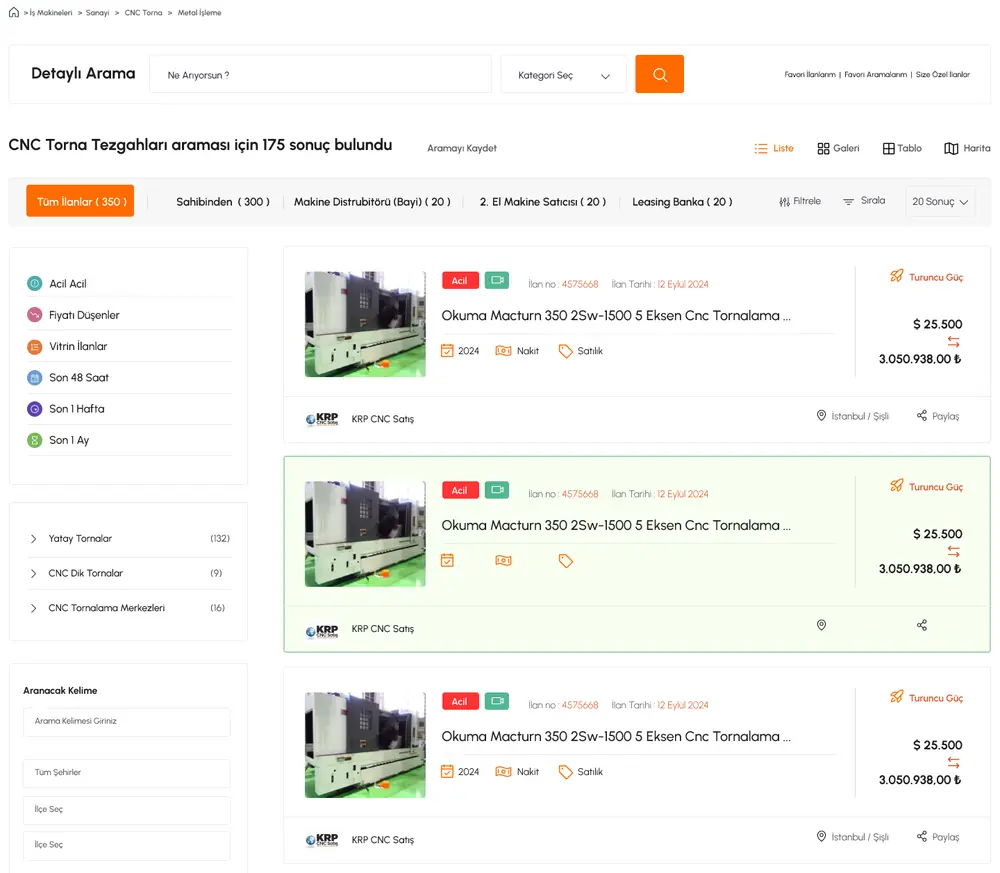
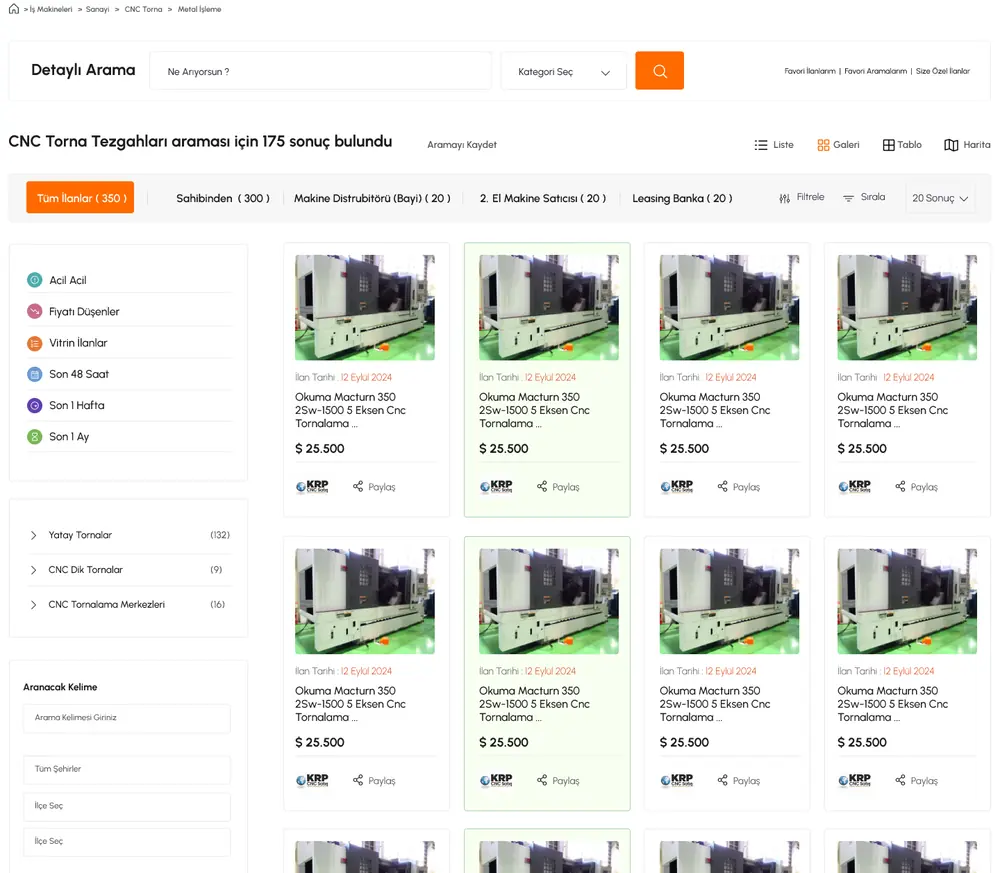
A search returns a result set the size of a category, 175 machines for one class of lathe, and four ways to read it — as a list, as a gallery, as a table and on a map. Those are not four skins of the same screen. Somebody comparing prices wants the table, somebody who recognises the machine on sight wants the gallery, and somebody who has to send an engineer to go and look at it wants the map.
A machine is not a product
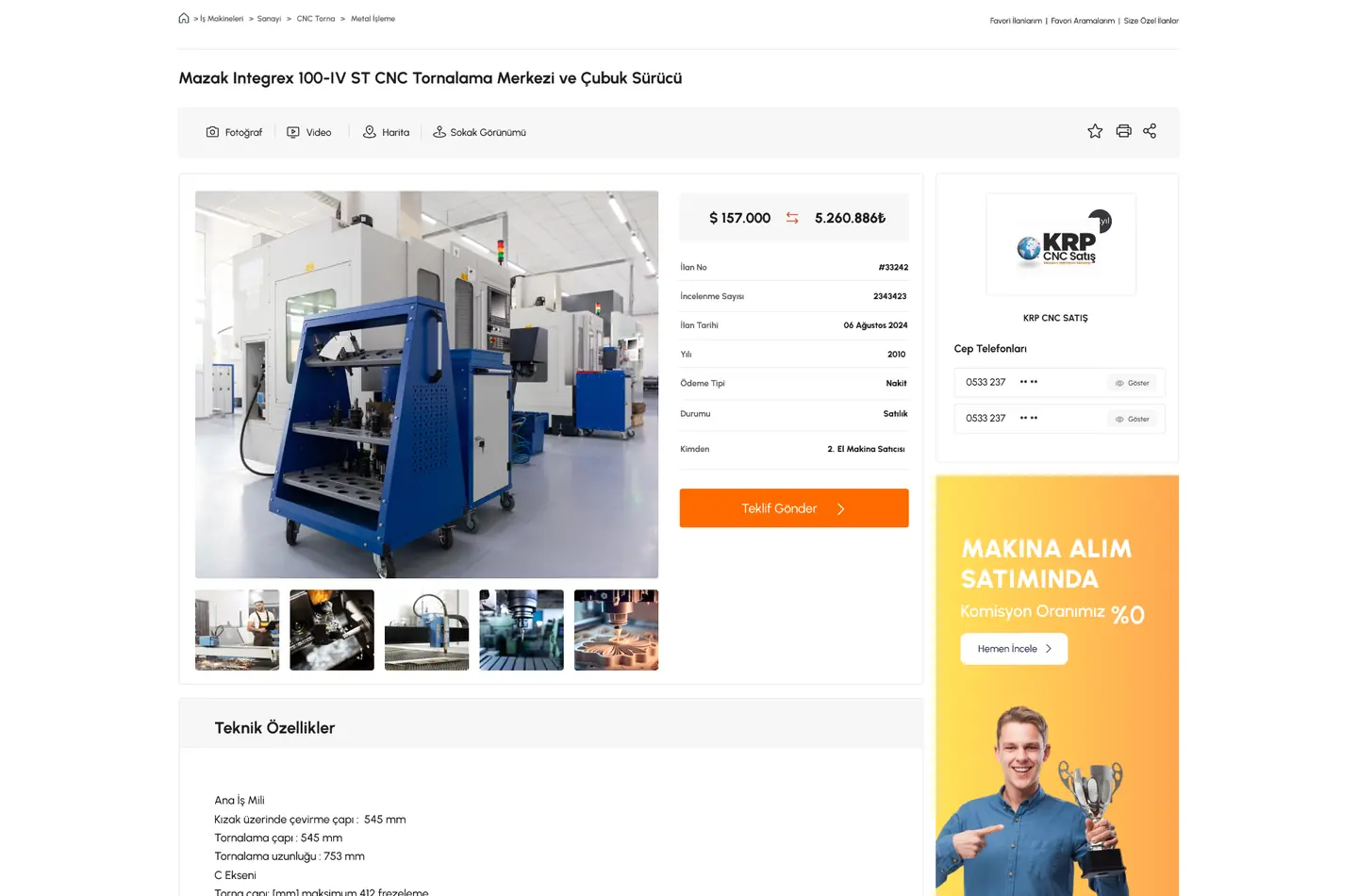
What is being sold is a used capital asset. It has a year, a condition, a page of technical specification — turning diameter, turning length, axis count — and a price quoted in dollars that will be settled in lira. The listing carries all of it, both currencies on the same line, because a buyer who has to convert the figure themselves is a buyer who has left the page to do it.
Who is selling matters as much as what. An owner with one machine to sell, a distributor with a floor of them, a second-hand dealer and a leasing bank clearing recovered stock are four different purchases — different price expectations, different negotiation, different paperwork. That is why the seller type is a row of tabs across the top of the results with a count on each, rather than a checkbox somewhere down the sidebar. The seller’s phone numbers sit behind a “show” control on the same principle: one click for a buyer, an obstacle for anything reading the page in bulk.
The seller’s side
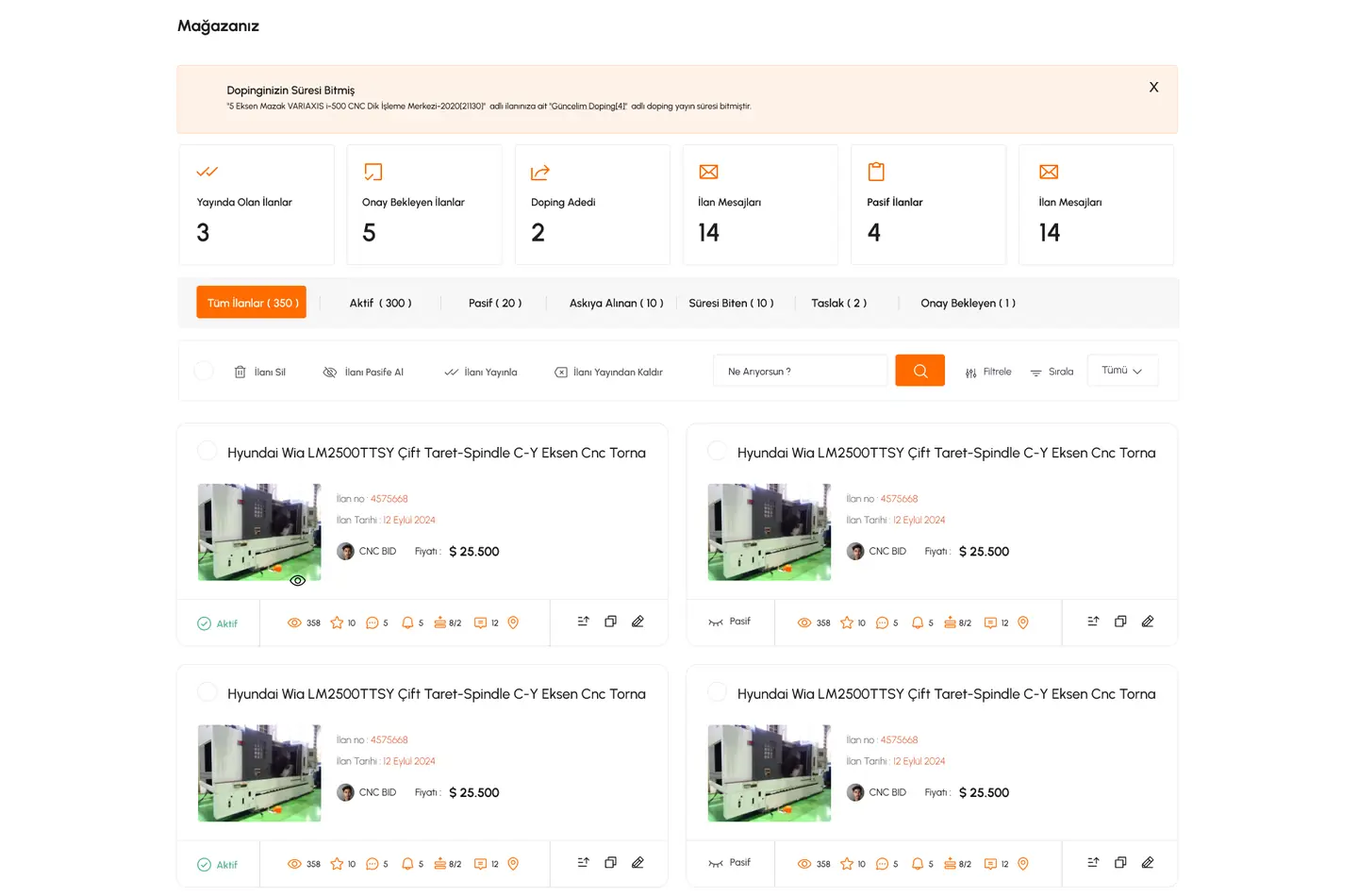
A listing has a life rather than a switch. It is drafted, waits for approval, goes live, is paused, is suspended, expires. The store is built around that — every state is a tab with its own count, listings are published, paused or withdrawn in batches rather than one at a time, and each row carries what it earned: views, favourites, enquiries, messages.
Paid placement is part of the same picture, and it runs out. The store says which listing lost its promotion and when, at the top of the page, because the seller who paid for it is the last person who should have to work that out for themselves.
When the machine is not there yet
Half of this market is waiting for stock that has not been listed. A search that returns nothing can be saved, and a buyer who cannot find the machine can post the requirement instead of leaving. Both are records rather than messages, which is the only reason either is worth having.

More work

Tell us what is not working.
A quote takes about five minutes to request and we reply within two working days — with a real assessment, not a brochure.