Xenol Lubricants
A lubricant maker's catalogue you enter by naming your vehicle rather than a product code — and that ends in a datasheet rather than a sales page.
- Client
- Xenol Lubricants
- Sector
- Lubricant manufacturing
- What we did
- Web Development

What it does
Xenol makes engine oils, greases and antifreeze at a plant in Kocaeli and sells them at home and for export. The site has to serve two people who have almost nothing in common: somebody buying a litre for their motorcycle, and a plant engineer sourcing a barrel of metal-working fluid.
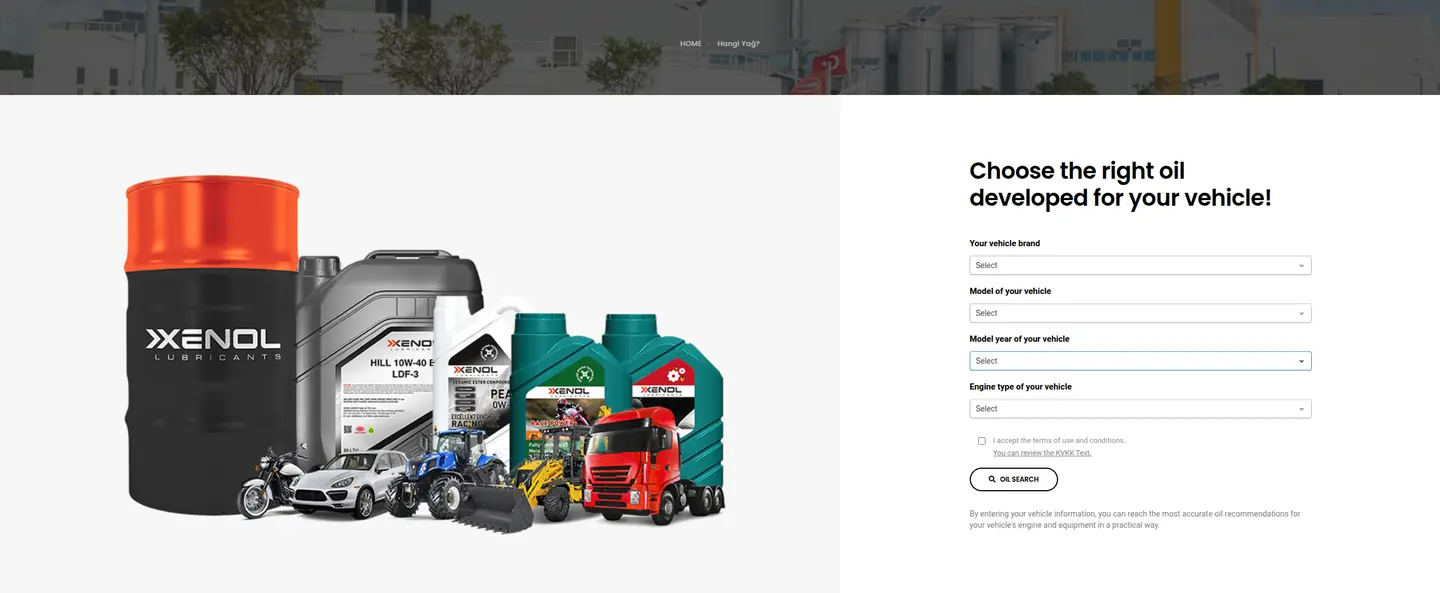
Neither of them arrives knowing a product code. So the most prominent thing in the header, on every page, is not the catalogue — it is Which oil?
Nobody shops for lubricant by its name
Behind that button are four questions about the vehicle rather than about the oil: brand, model, model year, engine type. Answer them and the site returns the products that fit, which is the opposite of asking somebody to work out for themselves whether a 10W-40 fully synthetic is the one their engine wants.
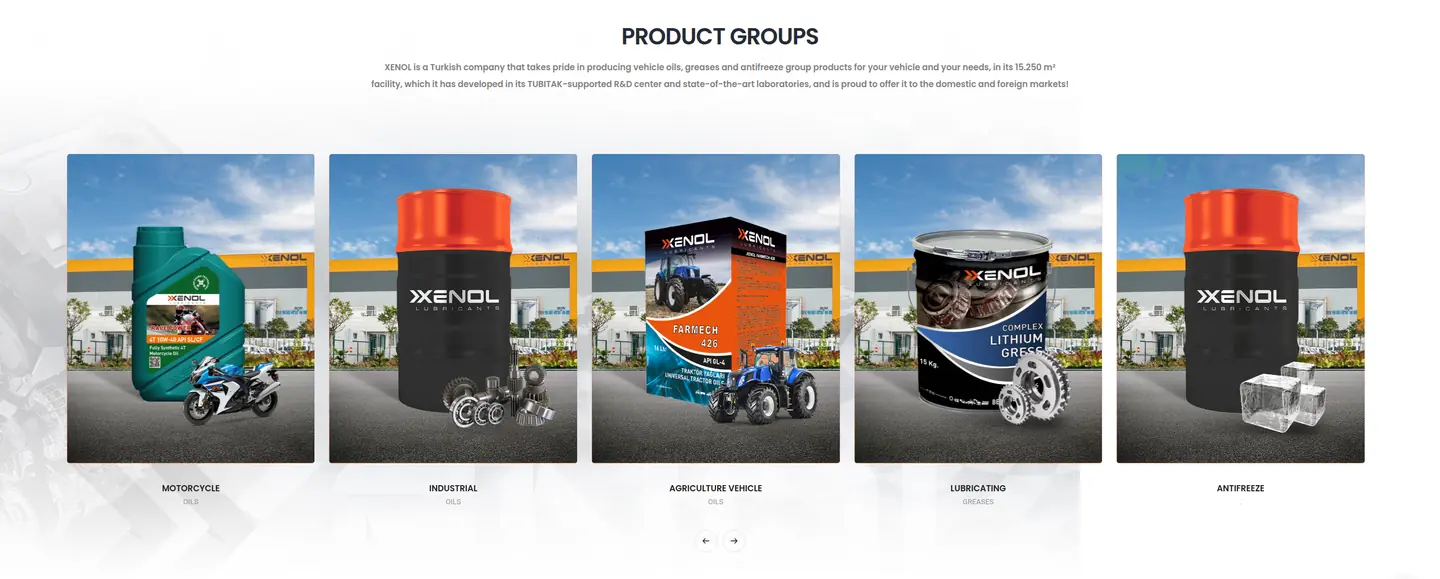
The catalogue is organised the same way — by what the oil goes into rather than by what it is made of. Motorcycle, industrial, agricultural vehicle, greases, antifreeze. A visitor who prefers to browse is still browsing along the axis they think in.
A product page is a datasheet
The other visitor needs the opposite of persuasion. A product page carries the pack sizes as a row — one litre through to an IBC — a product code, and the MSDS and TDS as documents to download, with the properties, the typical values and the specifications and approvals the product meets each behind their own tab.
For a lubricant that approvals list is the purchase decision. An engineer is checking whether it meets a standard their equipment warranty names, and a page that buries it under adjectives has failed at the only job it had.
Written to be read in more than one language
The site runs in more than one language for a company that sells beyond its own market, and the product records — descriptions, properties, approvals — are translated with it rather than left in the language they were written in.

More work
Tell us what is not working.
A quote takes about five minutes to request and we reply within two working days — with a real assessment, not a brochure.